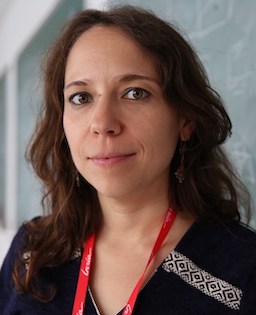
Flavien Baudu
Assimilation of satellite-derived flood information into shallow water models for improving flood forecasting
in progress
Université Montpellier, in progress.
Supervision: R. Hostache, C. Delenne
“Assimilation of satellite-derived flood information into shallow water models for improving flood forecasting”
Abstract.
The vulnerability of populations to flooding is increasing worldwide under the combined effect of climatic and socio-economic changes. It is more pronounced in the Southern countries because of the lack of protection measures, monitoring data and forecasting tools to anticipate extreme events. Cambodia, for example, is regularly hit by major flooding on the Mekong River and Tonle Sap lake. These floods are both beneficial to agriculture in terms of water supply and soil enrichment, but also harmful when they are exceptional and responsible for long, large-scale floods that represent a challenge in terms of human, health and food safetý. In this context, predicting and assessing flood risk is essential. However, flood risk forecasting at high resolution and over large areas remains a challenge due to (i) the lack of in situ hydrological data in many parts of the world, (ii) the high computation times of large-scale numerical models and (iii) the (often significant) model uncertainty. Indeed, although 2D Shallow Water models are a priori well suited to modelling free-surface flows, their application to risk forecasting is still hampered by the uncertainties affecting them, linked in particular to a lack of knowledge of the topography, or of their boundary conditions. Cambodia’s floodplains are a good illustration. Indeed, the topography is strongly influenced by the small scale drainage networks (Preks) build for agriculture. These are poorly mapped, and their geometry is poorly observed, even though they play an important role in the propagation of water during inundation periods. The missing or partial data we have to feed the models makes simulations highly uncertain or even erroneous, which greatly hampers decision-making based on model results. In this context, the PhD will focus on one main research question: How can large collections of in situ and satellite-derived flood information be optimally integrated to parameterize and control large-scale hydraulic models in data- scarce areas? The PhD will therefore build on recently developed innovative hydraulic modelling approaches (shallow water models with porosity) that enable large-scale applications. In particular, one of the main objectives of the PhD will be to develop an efficient framework for assimilating satellite-derived flood extent maps, in order to compensate for the lack of observations relating to riverbed bathymetry and discharge, as well as floodplain topography. The hydraulic model that will be used (SW2D-DDP) is based on an unstructured mesh and integrates porosity concepts in combination with traditional shallow-water equations. In such a model, the definition of porosity as a function of water depth enables the detailed representation of the floodplain and riverbed geometry, when adopting relatively large mesh cells. Moreover, the effective integration of remotely sensed flood information into hydraulic models remains a crucial issue. The candidate will therefore investigate new ways of using Earth observation data (i.e., flooded areas and water levels derived from satellite image collections) to recover uncertain model parameters and boundary conditions. The method will be developed and validated using synthetically generated datasets as well as real event data extracted from Copernicus satellite image archives. Extensive testing will be carried out on a number of high-magnitude floodplain events in Cambodia and France.